Best Live Dealer Casino Games Online (2026) | Technical & RTP Audit

Forget the marketing hype. If you want to understand how the world's Best Live Dealer Casino Games actually operate behind the cameras, you need a strict technical audit. My name is Carlos Costa Silva, and as an independent casino auditor with over two decades of experience, my job is to look straight past the charismatic dealers, the flashing studio lights, and the massive multiplier graphics to verify the raw mathematics, Return to Player (RTP) percentages, and physical hardware integrity of live casino games. In 2026, the global gambling market has fundamentally shifted. Players are heavily migrating away from algorithmic, computer-generated table games in favor of authentic, physical games broadcast from multi-million-dollar studios operated by tier-one providers like Evolution Gaming, Pragmatic Play Live, and Playtech.
If you are looking for a complete, uncompromising breakdown of exactly how these live games operate, you have found the right category. This guide is strictly focused on the games themselves—not just the platforms hosting them. We are going to dissect the strict mathematics of Live Blackjack, expose the hidden volatility in multiplier games like Lightning Roulette, and break down the exact Optical Character Recognition (OCR) technology that translates a physical card on a felt table into a digital payout on your smartphone screen. Live dealer games offer the absolute highest levels of transparency in the online gambling industry, but they also introduce complex new rule sets, dangerous side bets, and high-variance game shows designed to drain the bankrolls of uneducated players. Below this massive technical audit, you will find our verified rankings of the top casinos offering these world-class games.
Table of Contents
- Our Auditor Verdict on Live Dealer Game Mechanics
- The Core Trinity: Auditing Classic Live Table Games
- The Multiplier Revolution: High-Volatility Variants
- Live Game Shows: Television Entertainment Meets Casino Math
- The Technology Driving the Games: A Hardware Audit
- The Auditor's Warning: Mathematical Traps in Live Games
- Our Top-Rated Casinos for Live Dealer Games
- Frequently Asked Questions About Live Casino Games
Our Auditor Verdict on Live Dealer Game Mechanics
Live dealer casino games objectively represent the absolute pinnacle of technological achievement in the online gambling sector. By completely replacing the invisible Random Number Generator (RNG) algorithms of the past with physical, tangible casino equipment, software providers have eradicated the psychological barrier of trust that previously kept high-net-worth players away from digital gambling. When you play a live dealer game, the physical outcome is absolute. You watch the physical ivory ball bounce across the frets of the roulette wheel; you watch the dealer pull the physical playing card directly from the polycarbonate shoe. There is zero algorithmic manipulation.
However, from an auditing and mathematical perspective, the introduction of live human dealers, expensive physical studio real estate, and massive global streaming bandwidth costs operators tens of millions of dollars a year. To maintain their profit margins on these highly expensive games, software developers have engineered incredibly subtle mathematical shifts in the rule sets. As an educated player, you must understand that the basic Live Blackjack game you play online might look identical to the one in Las Vegas, but the deck penetration rules and shuffling mechanics are drastically different. We analyze every single game variation to ensure you understand exactly what your Expected Value (EV) is before you place a single chip on the digital felt.
Key Advantages of Live Dealer Games
- Absolute Physical Transparency: The removal of PRNG (Pseudorandom Number Generator) software means you rely purely on physical physics and real-world probability, completely eliminating the fear of "rigged" digital algorithms.
- Unmatched Immersion and UI: Providers stream in 4K resolution at sixty frames per second, utilizing multiple camera angles that automatically switch based on the game state (e.g., zooming in on the roulette ball as it begins to drop).
- Social Multiplayer Dynamics: Unlike isolated digital slots, live dealer games are a communal experience. You can use the live chat interface to communicate directly with the dealer and celebrate wins with other international players at your table.
- Extreme Volatility Options: The modern live game library extends far beyond standard 1:1 payouts. Through augmented reality and digital RNG multipliers layered over physical games, players can now chase payouts exceeding 10,000x their initial bet.
The Core Trinity: Auditing Classic Live Table Games
At the absolute foundation of every live studio are the "Big Three" table games: Blackjack, Roulette, and Baccarat. While these games have existed for centuries, their live online counterparts operate under very specific technological and mathematical conditions.
Live Blackjack: The Test of Skill and Strategy
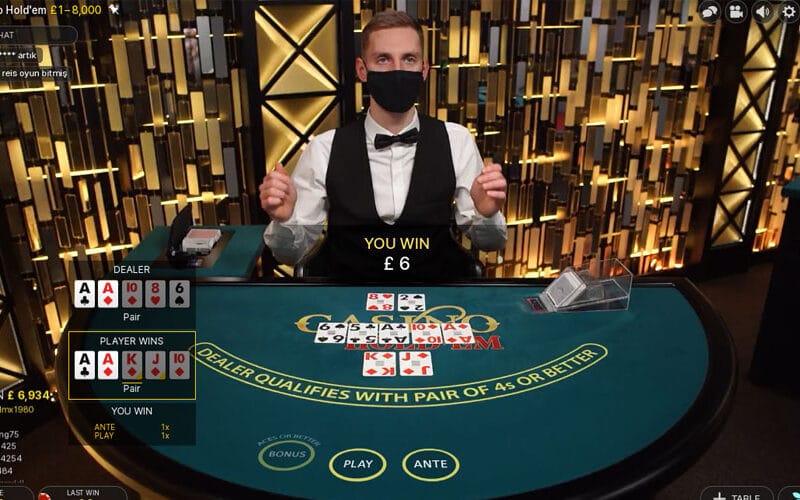
Live Blackjack is the most heavily trafficked card game in the live casino ecosystem because it mathematically offers the lowest house edge (often hovering around 0.50%) when played with perfect Basic Strategy. You are physically dealt cards by a human dealer, and you must decide whether to hit, stand, double, or split.
From an auditing perspective, you must scrutinize the table rules before sitting down. We strictly look for Live Blackjack tables that mandate a 3:2 payout on a natural blackjack and enforce the "Dealer Stands on Soft 17" rule. The most critical mechanical difference in the online live format is deck penetration. Live dealers use an eight-deck shoe, but they physically cut the deck exactly in half with a red plastic insert. Once half the shoe is dealt, the cards are completely swapped and shuffled. This shallow penetration rule makes traditional card counting mathematically impossible and entirely useless. You must rely solely on mathematical Basic Strategy charts to grind out your edge.
Live Roulette: Physical Physics and Zero Volatility
Live Roulette offers the purest form of gambling variance. A professional croupier spins a highly calibrated, precision-engineered physical wheel and drops a ball. There are no cards, no complex player decisions, and no strategy charts; there is only physical probability.
In the live gaming sector, you are usually presented with two main classic choices: European Roulette (single zero) and American Roulette (double zero). As an auditor, I fiercely warn players against American Roulette. The addition of the "00" pocket mathematically inflates the house edge from a highly manageable 2.70% (European) to a devastating 5.26% (American), while offering the exact same 35:1 payout on a straight-up number. Always ensure you are loading a European or French Live Roulette table. Furthermore, tier-one studios utilize automated laser sensors positioned above the wheel to instantly read the winning pocket the microsecond the ball drops, ensuring instantaneous digital payouts with zero human error.
Live Baccarat: The High-Roller's Mathematical Haven
Live Baccarat is massively popular in the Asian gaming markets and serves as the primary battleground for high-net-worth VIPs. The beauty of live baccarat lies in its mathematical simplicity. You bet on either the "Player" hand or the "Banker" hand to reach a total closest to nine.
Because the strict drawing rules of baccarat mathematically dictate that the Banker hand will win slightly more often than the Player hand (creating a microscopic 1.06% house edge), classic live tables charge a mandatory 5% commission on all winning Banker bets. To speed up the game flow, many providers introduced "No Commission Live Baccarat." While this sounds fantastic to the uneducated player, our mathematical audit reveals the trap: in No Commission Baccarat, if the Banker wins with a specific total of 6, the payout is brutally slashed to 1:2 (half your bet). This single rule change actually increases the overall house edge, making the classic 5% commission tables the mathematically superior choice for serious players.
The Multiplier Revolution: High-Volatility Variants
In recent years, software giants like Evolution Gaming and Pragmatic Play realized that a new generation of players found standard 1:1 payouts boring. To combat this, they merged traditional live dealer games with massive, algorithmic RNG multipliers, completely changing the volatility profile of the games.
Lightning Roulette & Mega Roulette
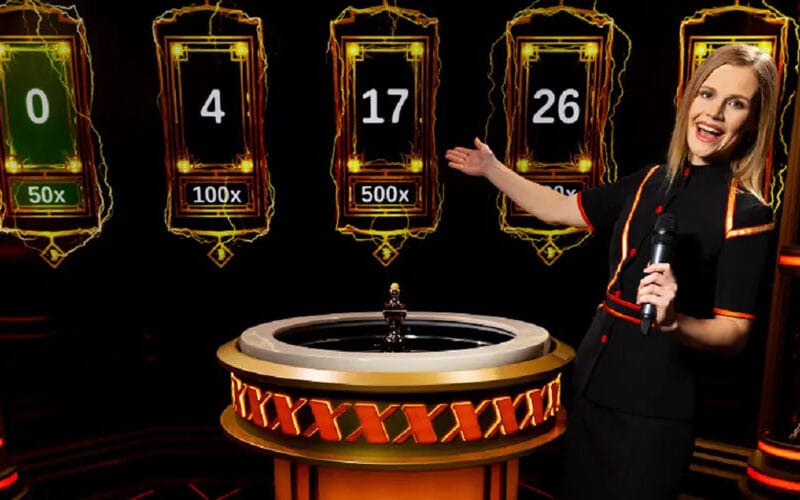
These games completely revolutionized the industry. The core game is a standard physical European roulette wheel spun by a live dealer. However, once the betting window closes, an RNG software algorithm strikes up to five random numbers with massive multipliers, ranging from 50x to 500x. If you place a straight-up bet on "Black 17," it gets struck with a 500x multiplier, and the physical ball lands in that pocket, you win a massive jackpot.
The mathematical trade-off, however, is severe. To financially fund these massive 500x multiplier payouts, the casino must alter the base game mathematics. In Lightning Roulette, a standard, un-multiplied straight-up win only pays 29:1 instead of the traditional 35:1. This drastically reduces your bankroll sustain if you are trying to grind out standard wins. These games transform roulette from a low-variance table game into a high-variance slot machine experience.
Free Bet Blackjack & Power Blackjack
These live blackjack variants offer players incredible theoretical advantages. In Free Bet Blackjack, the casino physically pays for your "Double Down" and "Split" bets on certain hands (like hard 9, 10, or 11). You get to double your potential winnings without risking any extra of your own bankroll.
However, as an auditor, I track the mathematical compensation. To offset giving you free money, the casino introduces the "Push 22" rule. If the dealer busts with an exact total of 22, all active player hands do not win; they push (tie). This rule rescues the casino from massive losses and shifts the house edge right back to the operator. These games are incredibly fun and action-packed, but you must alter your Basic Strategy specifically for the "Push 22" rule to survive.
Live Game Shows: Television Entertainment Meets Casino Math
The fastest-growing category in the live dealer sector is the "Game Show." Pioneered entirely by Evolution Gaming with the release of Dream Catcher, these games abandon traditional casino equipment entirely, replacing it with massive physical money wheels, augmented reality (AR) graphics, and charismatic television-style hosts.
Crazy Time & Monopoly Live
These are the absolute titans of the live casino world, frequently hosting over ten thousand active players in a single game round. The core mechanic is a massive, 54-segment physical wheel. Players bet on numbers (1, 2, 5, 10) or specific bonus segments. If the wheel stops on a bonus segment like "Crazy Time" or "Coin Flip," the camera physically moves to a different part of the studio where a highly complex, RNG-driven bonus game plays out, offering theoretical maximum payouts of up to 20,000x your bet.
From a mathematical auditing standpoint, these games are the definition of extreme volatility. The RTP (Return to Player) of Crazy Time hovers around 96.08%, which is mathematically fair and on par with modern video slots. However, the hit frequency of the massive bonus rounds is incredibly low. You can easily sit through fifty spins of small losses waiting for a bonus to trigger, rapidly draining your balance. Game shows must be treated strictly as high-risk entertainment budgets, not as a reliable platform for grinding out steady profits.
Sweet Bonanza CandyLand & Adventures Beyond Wonderland
Pragmatic Play and Playtech responded to Evolution's dominance with their own massive studio productions. Sweet Bonanza CandyLand takes the mathematics and visual assets of their most famous slot machine and translates it into a physical live wheel format. The integration of digital RNG screens mapped perfectly onto physical studio elements is a technical marvel. However, the mathematical warning remains the same: you are playing a high-volatility slot machine presented as a live TV show. Bankroll management is absolutely critical here.
The Technology Driving the Games: A Hardware Audit
The ability to process bets from thousands of international players simultaneously on a single physical card dealt in Riga requires an infrastructure that rivals global financial stock exchanges. Here is the technical hardware we audit to ensure game integrity.
Optical Character Recognition (OCR)
This is the absolute backbone of live card games. Every single playing card manufactured for a live casino studio contains microscopic barcodes or utilizes a highly specific, machine-readable font. As the dealer physically slides the card out of the shoe, it passes directly over a microscopic laser scanner flush-mounted into the physical table. The OCR software instantaneously reads the card, encrypts that data, and broadcasts it to the graphical user interface (GUI) on your screen. This happens in fractions of a millisecond, allowing the digital software to know exactly who won and process payouts instantly, completely removing human error from the dealer.
The Game Control Unit (GCU)
Attached beneath every single live dealer table is a highly encrypted, heavily audited computer called the Game Control Unit. The GCU is responsible for video encoding and mathematical synchronization. If a player bets $50 on Red, the GCU logs that bet. When the dealer spins the roulette wheel, the GCU tracks the physical ball drop, communicates with the OCR lasers to confirm the winning number, and executes the financial transactions for all ten thousand players at the table simultaneously. Without a perfectly functioning GCU, live dealer gaming is technologically impossible.
Continuous Shuffling Machines (CSMs)
To maintain absolute game speed and prevent any mathematical advantage through card counting, many fast-paced live tables (like Speed Baccarat) utilize Continuous Shuffling Machines. As soon as a hand is finished, the dealer takes the physical discard pile and pushes it straight back into the automated machine, which instantly integrates those cards randomly back into the active shoe. This mathematically ensures that every single hand is completely independent, and the true count resets to absolute zero every single minute.
The Auditor's Warning: Mathematical Traps in Live Games
While the physical hardware and the broadcast studios are heavily regulated and entirely legitimate, operators generate massive profits by exploiting players who do not understand the hidden mathematics of specific betting options. Here are the red flags you must actively avoid.
1. The Devastation of Side Bets
When you open a Live Blackjack or Live Baccarat table, the screen is littered with optional betting circles: Perfect Pairs, 21+3, Player Pair, Banker Pair, or Super 6. These are Side Bets, and they are mathematically engineered to destroy your bankroll. While the core game of blackjack has a tiny 0.5% house edge, the "Perfect Pairs" side bet carries a brutal mathematical house edge of over 6.0%. You are taking the safest game in the casino and voluntarily throwing your money into a high-variance, negative EV trap simply because the "25 to 1" payout looks shiny. Stick strictly to the primary base game.
2. The "Bet Behind" Pitfalls
In highly popular Live Blackjack studios, all seven physical seats at the table might be occupied. To allow infinite players to participate, providers offer a "Bet Behind" feature. You place your digital chips behind a seated player, and whatever happens to their hand happens to your money. If they win, you win; if they bust, you lose. The mathematical danger here is that you have absolutely zero control over their physical decisions. If you bet behind a player who does not understand Basic Strategy and decides to "Hit" on a hard 19, you will lose your money due to their incompetence. Never use the Bet Behind feature unless you have watched the player for several rounds and verified they are playing strict mathematical strategy.
3. Connection Latency and Unplaced Bets
Live dealer games operate on a strict, unyielding countdown timer. You usually have precisely twelve to fifteen seconds to place your chips before the GCU locks the software and the dealer says "No more bets." If you are playing on a mobile device with a fluctuating cellular connection, visual latency can cause your bet to register locally on your screen, but fail to reach the casino's server before the timer expires. If the bet is "Rejected," you have no action on the round. Always ensure you are playing high-stakes live games on a highly stable Wi-Fi connection to prevent agonizing missed opportunities.
Our Top-Rated Casinos for Live Dealer Games
An exceptional live casino experience depends entirely on the financial liquidity, server bandwidth, and provider partnerships of the operator hosting the software. You need a casino that offers fully uncompressed 4K video streaming, immediate access to private high-roller VIP tables, and extremely fast withdrawal processing so you can actually control your winnings. Our auditing team has meticulously tested hundreds of operators to identify the absolute best platforms integrating the full suites from Evolution, Pragmatic Play, and Playtech. Every single site listed in the category below is strictly licensed, highly secure, cryptographically verified for fairness, and technologically prepared to stream the real casino floor directly to your device. Browse our verified rankings and take your seat at the live tables.
Frequently Asked Questions About Live Casino Games
Are live dealer casino games actually broadcast in real-time?
Yes, absolutely. The games are broadcast entirely live with zero delay. You can easily verify this by utilizing the live chat function to speak directly to the dealer, who will read your message on their studio monitor and respond to you verbally in real-time, proving the feed is not pre-recorded.
Is it possible for the live dealer to cheat or manipulate the cards?
It is virtually impossible. The dealers are highly trained professionals operating in studios heavily monitored by pit bosses, compliance officers, and dozens of high-definition cameras recording their every micro-movement. Furthermore, the cards are scanned instantly by OCR technology, meaning the software tracks the mathematical integrity of every single hand perfectly.
Why can I not play live dealer games in free demo mode?
Unlike digital slots which cost nothing to run once programmed, live dealer studios require massive financial overhead. The operators must pay for physical real estate, high-end broadcast equipment, server bandwidth, and the salaries of the dealers and pit bosses. Because of this massive operating cost, live seats are strictly reserved exclusively for players actively wagering real money.
Do multiplier games like Lightning Roulette have worse standard odds?
Yes. To mathematically fund the massive 500x RNG multipliers applied to random numbers, the software providers severely cut the payout on standard straight-up wins. Instead of receiving a standard 35:1 payout, a non-multiplied straight-up win on Lightning Roulette pays only 29:1, drastically increasing the volatility and risk to your bankroll.
Can I use a casino welcome bonus to play live game shows?
You must heavily scrutinize the bonus terms. Because live games like Blackjack and Baccarat have an incredibly low house edge, many casinos completely restrict them from bonus wagering, or reduce their contribution rate to 5%. However, because Live Game Shows (like Crazy Time) are highly volatile and operate more like slots, some casinos allow them to contribute 50% or 100% to rollover requirements. Always check the fine print.
What happens if a physical mistake is made by the live dealer?
If a dealer makes a mechanical error—such as dropping a card or pulling two cards from the shoe simultaneously—the game is immediately halted. The dealer will call the floor Pit Boss, who will review the high-definition video footage on a secure monitor, manually override the Game Control Unit software to correct the error, or void the entire round and mathematically refund all player bets.
Carlos Costa Silva
Founder and Chief Game Analyst at Casino545 (Since 2004)
Mission: I created Casino545 with a single, uncompromising goal: to cut through the marketing noise and bring real transparency to the online casino industry. My focus is on publishing independent, data-driven reviews built on actual operational testing, financial verification, and strict regulatory analysis. Marketing budgets don’t buy my opinions. Every evaluation follows rigorous editorial standards so players can access safe, compliant, and fair platforms.
Industry Experience: I’ve been breathing iGaming since 2004, right when regulated online gambling started expanding across Europe. I spent years working on the operational side for a major European operator, managing VIP support, payment processing, and internal risk controls. That “behind-the-scenes” experience gave me direct, hands-on exposure to how withdrawal procedures, AML compliance protocols, fraud prevention systems, and financial audits actually work. Today, I use that insider knowledge to audit casino payment systems, analyze withdrawal reliability, assess hidden bonus risks, and demand operational transparency from licensed platforms.
Core Areas of Expertise:
- Slot Volatility Mathematics: Analysing RTP variations and hit frequencies across major providers.
- Regulatory Frameworks: Deep understanding of European and local licensing mandates.
- Crypto & Fiat Payment Systems: Testing the real-world friction of casino banking infrastructures.
Review Methodology:
- Real-Money Deposit Testing: I personally fund and test casino cashier systems to evaluate transaction clarity and payment processing efficiency.
- Withdrawal Time Auditing: I measure the exact withdrawal cycle — from the moment I hit “submit” to the second the funds settle in my bank account — to prove financial reliability.
- Terms & Conditions Risk Analysis: I dig into the fine print to expose clauses affecting withdrawal limits, bonus conversion rules, and unfair account restrictions.
- Support Competency Verification: Anonymous, rigorous testing of customer support accuracy, escalation handling, and technical knowledge.
Commitment to Responsible Gambling: Player protection isn’t just a buzzword; it’s the core of my evaluation framework. I only prioritize operators that prove their regulatory compliance, enforce transparent policies, and offer structured self-exclusion systems. Gambling should be safe entertainment, and I strongly encourage access to independent support networks like GamCare and Gambling Therapy.