
At Casino545, we approach the online casino industry with radical transparency. We believe that online gambling can and should be a highly entertaining, thrilling form of leisure. However, as professional auditors, we also deeply understand the mathematics, psychology, and inherent risks associated with this industry. While the vast majority of players enjoy casino games without any negative impact on their lives, we recognize that for a vulnerable minority, gambling can escalate from a harmless pastime into a severe psychological and financial crisis.
On This Page
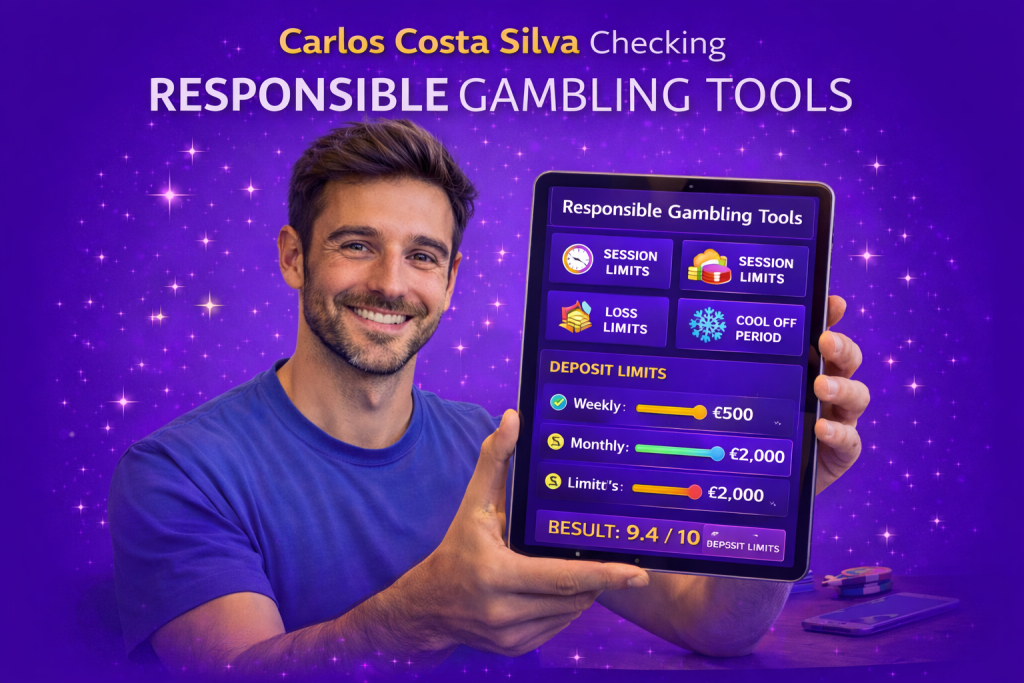
I am Carlos Costa Silva, and my career has been built on auditing casinos to ensure they treat players fairly. But mathematical fairness is only half of the equation; the other half is human safety. Our commitment to you is absolute: we refuse to promote any operator that does not take Responsible Gambling (RG) seriously. This page is not a generic legal disclaimer hidden in our website’s footer. It is a comprehensive, forensic masterclass designed to help you understand the psychology of betting, utilize technical safety tools, recognize the subtle warning signs of addiction, and find immediate professional help if you or a loved one needs it. Your financial and mental well-being is, and always will be, our highest priority.
1. The Core Philosophy of Sustainable Entertainment
To engage with online casinos safely, you must first fundamentally shift how you view the concept of gambling. The industry is built on a mathematical concept known as the House Edge. This means that every single game—from Blackjack to modern video slots—is mathematically programmed to retain a percentage of all money wagered over an infinite timeline.
Therefore, the most critical principle of responsible gambling is this: You are paying for entertainment, you are not investing to make money.
When you buy a ticket to a concert or a football match, you pay a set fee for a few hours of adrenaline and entertainment. You do not expect to walk out of the stadium with a financial profit. Online gambling must be viewed through this exact same lens. If you happen to hit a jackpot and withdraw a profit, that is a fantastic bonus. But the baseline expectation must always be that the money you deposit is the “ticket price” for the entertainment you are about to consume.
The Golden Rules of Safe Play
- Never Gamble with Essential Funds: Never deposit money that is allocated for your rent, mortgage, groceries, utilities, or family care. Only wager discretionary disposable income.
- Never Chase Losses: This is the most dangerous trap in gambling. If you lose your daily budget, accept the loss and log off. Increasing your bets to win back lost money mathematically accelerates your ruin.
- Do Not Gamble When Emotional: Gambling while depressed, stressed, angry, or intoxicated severely impairs your prefrontal cortex, leading to impulsive, reckless financial decisions.
- Maintain Balance: Online gambling should only be a small fraction of a well-rounded lifestyle. It should never replace time spent with family, physical exercise, or professional responsibilities.
2. The Neuroscience of Gambling: Why It Can Become Addictive
To truly protect yourself, you must understand how gambling interacts with human biology. Gambling addiction is not a sign of weak willpower or low intelligence; it is a physiological response in the brain that can affect absolutely anyone, regardless of their background.
Modern casino games, particularly high-volatility slots, are masterclasses in behavioral psychology. They utilize a concept called a Variable Ratio Reward Schedule. When you spin a slot machine, your brain does not know if it will win, lose, or hit a massive bonus feature. This uncertainty triggers a massive release of dopamine—a neurotransmitter associated with pleasure, motivation, and reward—before the reels even stop spinning. The brain becomes addicted to the anticipation of the win, not just the win itself.
Furthermore, game developers use audio-visual mechanics like “Near Misses” (where two bonus symbols land, and the third one teases you by slowing down) and “Losses Disguised as Wins” (where you bet 2 euros, win 50 cents, but the machine celebrates with flashing lights and celebratory music). These mechanics trick your brain’s reward center into releasing dopamine even when you are mathematically losing money. Understanding these psychological triggers is the first step to neutralizing them and remaining in logical control of your session.
3. Recognizing the Warning Signs of Problem Gambling
The transition from casual, responsible play to problem gambling is rarely sudden. It is a slow, insidious process characterized by subtle behavioral shifts. Because gambling addiction does not have the visible physical symptoms of substance abuse, it is often referred to as the “hidden addiction.”
It requires brutal honesty to evaluate your own habits. Ask yourself the following forensic questions:
- Financial Secrecy: Have you started lying to your spouse, family members, or friends about how much time or money you spend on gambling platforms?
- Tolerance Building: Do you find that betting 1 euro no longer gives you an adrenaline rush, and you now feel compelled to bet 5 or 10 euros per spin to achieve the same level of excitement?
- The Chasing Cycle: When you lose your designated bankroll, do you immediately make another deposit to “win it back,” breaking the limits you set for yourself?
- Restlessness and Irritability: Do you feel anxious, easily angered, or highly restless when you are unable to gamble, or when someone interrupts your gaming session?
- Neglect of Responsibilities: Have you ever called in sick to work, ignored a family event, or skipped a social gathering specifically so you could stay home and gamble?
- Borrowing and Debt: Have you ever maxed out a credit card, taken out a personal loan, sold assets, or borrowed money from friends to fund your casino account?
- Obsessive Ideation: When you are not playing, are you constantly strategizing about your next session, thinking about past wins, or planning how to get more gambling funds?
If you answered “yes” to even one or two of these questions, you are exhibiting the early markers of gambling harm. If you answered yes to several, it is imperative that you utilize the tools and support networks detailed below immediately.
4. The Arsenal of Technical Player Safety Tools
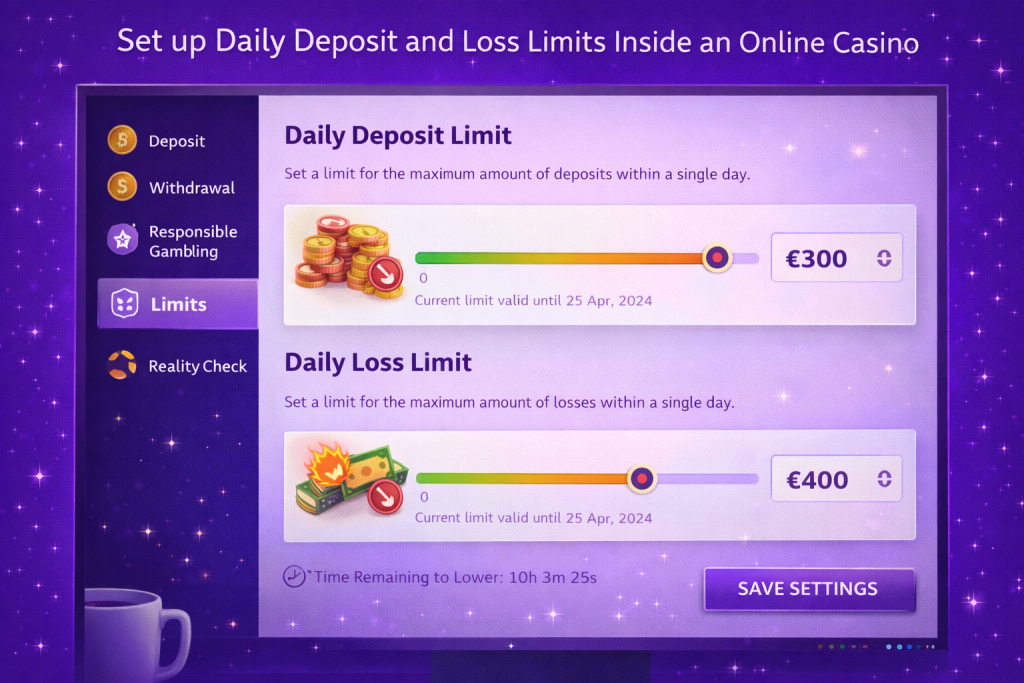
One of the primary reasons we only recommend licensed, regulated online casinos is because these operators are legally mandated to provide a comprehensive suite of Responsible Gambling tools. A safe player is a proactive player. I strongly advise every single user to set up these tools immediately after registering an account, before placing their first bet.
Deposit Limits
This is your first line of defense. A deposit limit prevents you from transferring more than a specified amount of money into your casino account over a 24-hour, 7-day, or 30-day period. Once you hit this limit, the cashier software completely locks down, and no further deposits will be processed. If you attempt to increase this limit, regulated casinos enforce a mandatory 24-hour to 7-day “cooling-off” period before the increase takes effect, preventing impulsive, heat-of-the-moment decisions.
Loss Limits
While a deposit limit controls what goes into the casino, a loss limit controls what you can lose from your existing balance. For example, if you have a balance of 500 euros and set a daily loss limit of 50 euros, the casino’s software will prevent you from placing any further bets the exact second your net losses for that day reach 50 euros. It mathematically forces you to walk away.
Wagering Limits
A wagering limit caps the total amount of money you can bet over a specific timeframe, regardless of whether you are winning or losing. This is an excellent tool for preventing “churning” (playing for 12 hours straight by constantly re-betting your small wins until the house edge eventually drains your balance).
Session Timers and Reality Checks
When you are deeply focused on a screen, “time blindness” occurs. You might sit down to play for 30 minutes, and suddenly three hours have vanished. A Reality Check is a pop-up notification that interrupts your game every 30 or 60 minutes. It explicitly tells you how long you have been playing and your exact net profit or loss for that session, forcing you to consciously acknowledge the reality of your gameplay.
Time-Outs (Cool-Off Periods)
If you feel yourself getting frustrated, angry, or tilted, you can trigger a Time-Out. This temporarily suspends your account for a short duration—typically 24 hours, 7 days, or 30 days. During this time, you cannot log in, deposit, or play. It acts as an instant circuit breaker to stop emotional chasing.
5. The Ultimate Failsafe: Self-Exclusion
If the tools listed above are not enough to keep your gambling safe, the ultimate step is Self-Exclusion. This is a formal, legally binding process where you instruct the casino to completely ban you from their services.
When you self-exclude, the casino will immediately close your account, return any remaining withdrawable balance to your bank account, and permanently block your email address, IP address, and physical address from creating a new account. Furthermore, they are legally required to remove you from all marketing databases; you will never receive another promotional email or SMS from them.
Self-exclusion can be set for 6 months, 1 year, 5 years, or a permanent lifetime ban. Once enacted, it cannot be reversed under any circumstances until the time period expires.
In mature regulatory markets, this process is centralized. For example, in the UK, players can register with GAMSTOP, which instantly bans them from every single licensed online casino in the entire country with one click. Sweden utilizes a similar national database called Spelpaus. If your country offers a national self-exclusion registry, we highly recommend utilizing it if you feel you have lost control.
6. Advanced Protection: Bank-Level Blocking
In 2026, player protection extends beyond the casino’s software. The modern banking sector has stepped up to provide an impenetrable layer of financial security. If you are struggling with gambling urges, you do not need to rely solely on casino tools; you can cut off the funding at the source.
The vast majority of modern digital banks (such as Monzo, Revolut, and Starling) and traditional high-street banks now offer a Gambling Block feature within their mobile apps. By toggling this switch, your bank will automatically decline any transaction categorized under the merchant code for gambling and betting (MCC 7995).
If you try to disable this block, the bank enforces a strict 48-hour to 72-hour friction period before the block is lifted. This delay is intentionally designed to outlast impulsive cravings, ensuring that by the time the block is lifted, the emotional urge to gamble has subsided. Combining a banking block with casino self-exclusion provides the most robust safety net possible.
7. How Casinos Use AI to Protect You
Transparency is a two-way street. You should know how premium, licensed operators monitor your behavior. In 2026, top-tier casinos do not just wait for you to ask for help; they utilize highly sophisticated Artificial Intelligence (AI) and Machine Learning algorithms to actively look for “Markers of Harm.”
The casino’s backend systems analyze thousands of data points per second. If the AI detects that you have radically increased your bet sizes after a loss, if you are making multiple failed deposit attempts with insufficient funds, or if you begin playing at 3:00 AM when your historical profile shows you only play on weekend afternoons, the system flags your account.
Once flagged, the casino’s Responsible Gambling team will intervene. They may enforce mandatory deposit limits on your account, temporarily suspend your access, or call you directly to perform an affordability check. Do not be offended if a casino asks for proof of income; they are legally mandated by regulators like the UKGC and MGA to ensure you are not gambling beyond your financial means.
8. Protecting Minors and Vulnerable Individuals
It is strictly illegal for anyone under the age of 18 (or 21 in certain jurisdictions) to participate in online gambling. At Casino545, we are uncompromisingly committed to preventing underage gambling. We exclusively recommend operators that utilize advanced, automated KYC (Know Your Customer) protocols via digital databases and open banking to verify the exact age and identity of a player before a single deposit can be made.
If you share a computer, tablet, or mobile device with minors in your household, it is your responsibility to ensure they cannot access gambling content. We strongly advise parents and guardians to implement the following safeguards:
- Never save your casino login credentials, passwords, or e-wallet PINs on shared family devices.
- Do not leave your device unattended while logged into a casino lobby.
- Install dedicated filtering software such as NetNanny, Cyber Patrol, or Qustodio, which actively block access to all gambling-related domains.
- For specialized, unbreakable protection, consider software like GamBlock, which is specifically designed to completely block any device from accessing gambling servers.
9. Where to Find Immediate International Support
If you have read this guide and feel that you, or a loved one, are suffering from a gambling problem, you must understand that you are not alone, and there is absolutely no shame in asking for help. Gambling addiction is a recognized medical condition, and there are thousands of trained professionals ready to assist you for free, with absolute confidentiality.
Please reach out immediately to one of the following international organizations:
- Gambling Therapy (Global): A completely free, global service offering practical advice and emotional support to anyone affected by problem gambling. They offer live text support in dozens of languages, making them the premier resource for international players. Visit them at their official website.
- GamCare (UK & International): The leading provider of information, advice, and support for anyone affected by gambling harms. They operate a 24/7 confidential helpline and offer free counseling sessions.
- Gamblers Anonymous: An international fellowship of men and women who share their experience, strength, and hope with each other to solve their common problem. They operate local, in-person meetings in almost every major city worldwide, utilizing a highly effective 12-step recovery program.
- BeGambleAware: An excellent starting point for assessing your risk level. They provide a free, anonymous self-assessment test and a wealth of resources on how to regain control of your finances and mental health.
Frequently Asked Questions About Responsible Gambling
Can I permanently delete my online casino account?
Yes. If you wish to permanently stop gambling, you should not just “close” your account, you must instruct the customer support team to permanently “Self-Exclude” you. Regular account closures can be reopened by asking support, but a permanent self-exclusion is legally binding and cannot be reversed by the operator under any circumstances.
What should I do if a casino refuses to apply a deposit limit?
If you are playing at a licensed casino (such as one regulated by the MGA or UKGC), refusing or delaying a player’s request to set a deposit limit is a severe regulatory breach. You should immediately withdraw your funds, stop playing, and file a formal complaint with the licensing authority. If the casino is an unlicensed offshore site, this is a clear sign of predatory behavior, and you should use bank-level blocking to cut off their access to your funds.
How can I help a family member who has a gambling problem?
Approaching a loved one about a gambling addiction requires profound empathy, not anger or judgment. Express your concern for their well-being, not just the financial losses. Do not pay off their gambling debts, as this enables the behavior. Instead, encourage them to install blocking software, offer to help them manage their finances temporarily, and guide them toward professional organizations like GamCare or Gamblers Anonymous for specialized counseling.
Do deposit limits apply to bonus funds and free spins?
No. Deposit limits specifically control the amount of your own real money that you transfer from your bank or e-wallet into the casino. They do not restrict how much bonus money the casino credits to you, nor do they limit the amount of money you can wager using your existing balance. If you want to restrict your actual gameplay volume, you must set a Wagering Limit or a Time Limit in addition to your Deposit Limit.
Founder and Chief Game Analyst at Casino545 (Since 2004)
Mission: I created Casino545 with a single, uncompromising goal: to cut through the marketing noise and bring real transparency to the online casino industry. My focus is on publishing independent, data-driven reviews built on actual operational testing, financial verification, and strict regulatory analysis. Marketing budgets don’t buy my opinions. Every evaluation follows rigorous editorial standards so players can access safe, compliant, and fair platforms.
Industry Experience
I’ve been breathing iGaming since 2004, right when regulated online gambling started expanding across Europe. I spent years working on the operational side for a major European operator, managing VIP support, payment processing, and internal risk controls. That “behind-the-scenes” experience gave me direct, hands-on exposure to how withdrawal procedures, AML compliance protocols, fraud prevention systems, and financial audits actually work.
Today, I use that insider knowledge to audit casino payment systems, analyze withdrawal reliability, assess hidden bonus risks, and demand operational transparency from licensed platforms.
Core Areas of Expertise
Slot Volatility Mathematics: Analysing RTP variations and hit frequencies across major providers.
Regulatory Frameworks: Deep understanding of European and local licensing mandates.
Crypto & Fiat Payment Systems: Testing the real-world friction of casino banking infrastructures.
Review Methodology
Real-Money Deposit Testing: I personally fund and test casino cashier systems to evaluate transaction clarity and payment processing efficiency.
Withdrawal Time Auditing: I measure the exact withdrawal cycle — from the moment I hit “submit” to the second the funds settle in my bank account — to prove financial reliability.
Terms & Conditions Risk Analysis: I dig into the fine print to expose clauses affecting withdrawal limits, bonus conversion rules, and unfair account restrictions.
Support Competency Verification: Anonymous, rigorous testing of customer support accuracy, escalation handling, and technical knowledge.
Commitment to Responsible Gambling
Player protection isn’t just a buzzword; it’s the core of my evaluation framework. I only prioritize operators that prove their regulatory compliance, enforce transparent policies, and offer structured self-exclusion systems. Gambling should be safe entertainment, and I strongly encourage access to independent support networks like GamCare and Gambling Therapy.