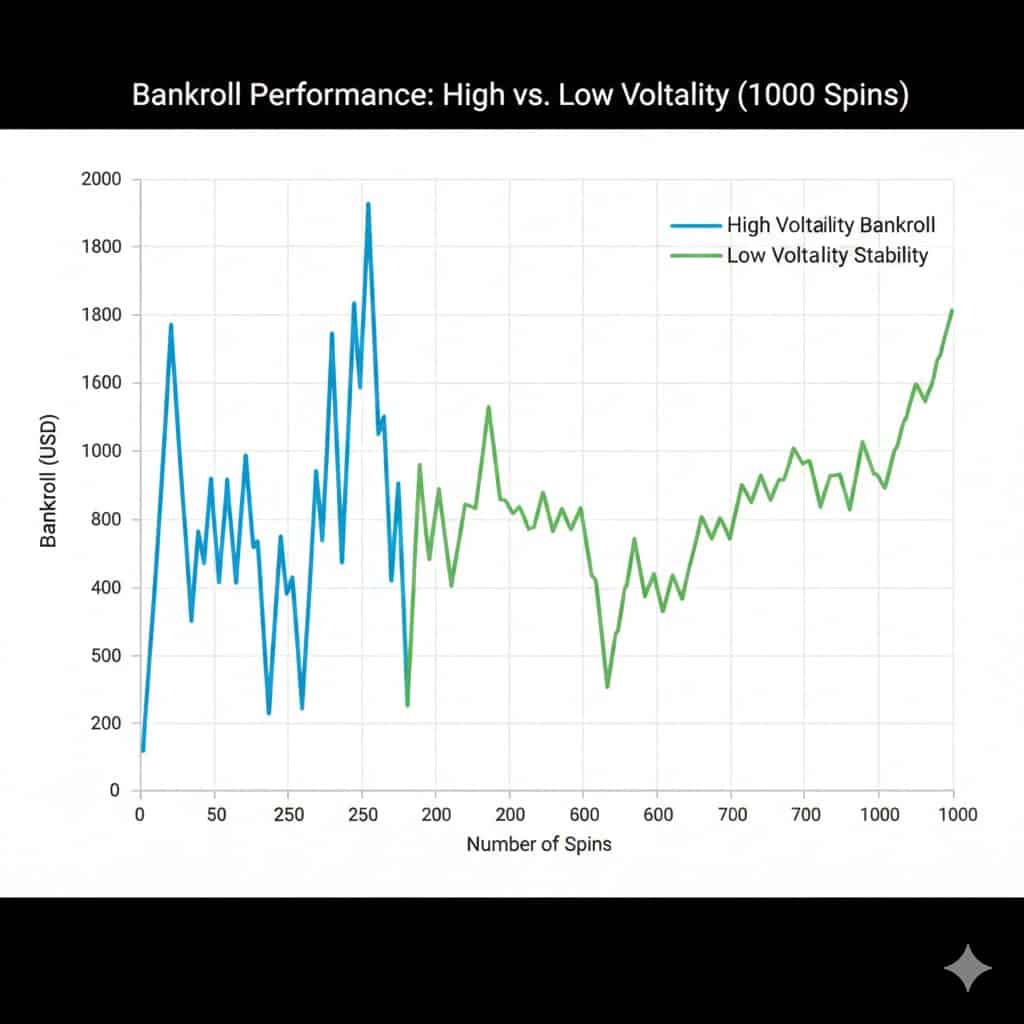
I see it every day. Players look at a percentage. They see “97% RTP” and think they have found a gold mine. They haven’t. They have found a mathematical trap designed to bleed a bankroll dry slowly, or quickly, depending on a variable they ignore.
I am Elena Petrova. I analyze slot algorithms for a living. I don’t trust luck. I trust variance. Today, we are stripping away the marketing fluff. We are looking at the raw numbers. This is the difference between Return to Player (RTP) and Volatility. If you don’t understand this, you are just donating to the casino.
The RTP Lie: It’s Not What You Get Back
Let’s start with the biggest misconception in the industry. RTP. Return to Player. Most players think this means if they bet $100, they get $96 back on a 96% RTP slot. This is false. It is statistically illiterate.
RTP is a theoretical calculation based on billions of spins. Billions. Not your hundred spins. Not your evening session. Over a massive sample size, the machine will keep 4% and return 96%. But in the short term? Anything happens.
Casinos love RTP marketing. It feels safe. It looks like a discount. But a 99% RTP slot can still destroy your balance in ten minutes if the volatility is wrong for your budget. The house edge is inevitable. RTP just tells you how much the house eventually takes. It does not tell you how they take it.
Volatility: The Real Killer
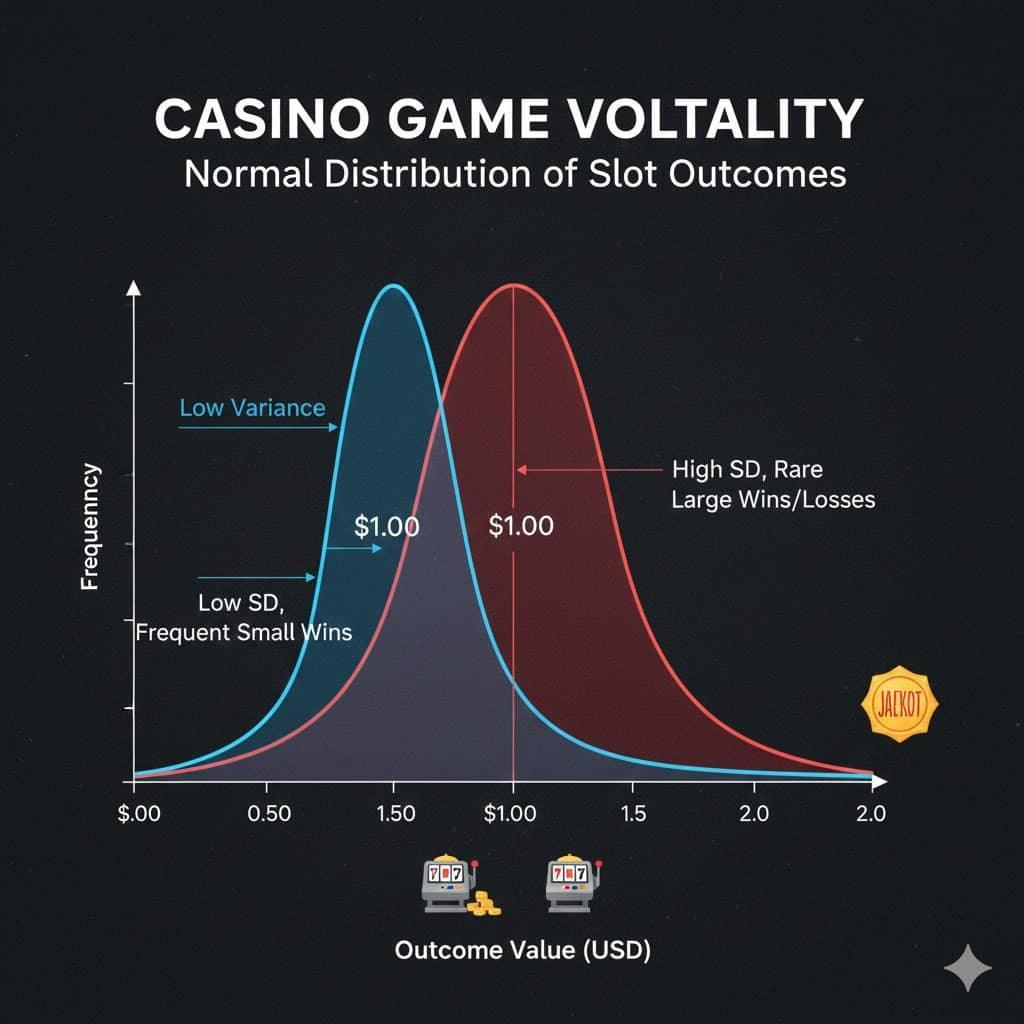
Volatility (or Variance) is the risk factor. It is the measure of how far the results deviate from the mean. This is the metric that actually affects your gameplay experience. It dictates the swing.
- Low Volatility: Frequent wins. Small amounts. Your graph looks like a gentle slope downwards. It keeps you playing. It extends “time on device.”
- High Volatility: Dead spins. Dead spins. Massive win. Dead spins. This is a heart attack graph. It eats money fast, with the statistical promise of a huge payout that may never come in your session.
The math is simple. High volatility equals high risk. You need a massive bankroll to weather the drought. If you play a high variance slot with a small budget, you will bust before the math corrects itself. You are betting on an outlier event.
The Correlation Matrix: How They Work Together
You cannot look at one without the other. They are the X and Y axis of your gambling destruction. Let’s break down the combinations.
High RTP + Low Volatility
This is the grinder. The “bonus wagering” slot. You win often, you lose slowly. The casino relies on boredom here. They know you will get tired of winning pennies and move to a riskier game. Examples include NetEnt’s Starburst or Blood Suckers. Good for extending play, bad for big wins.
High RTP + High Volatility
The “Unicorn.” These are rare. Casinos hate them. Games like Money Train (relaxed gaming) or specific “Book of” mechanics often fall here. The math allows for massive wins, and the house edge is thin. This is where the smart money goes, but only with strict bankroll management. You must endure pain to see the gain.
Low RTP + High Volatility
The “Tourist Trap.” Avoid these. Progressive Jackpots often sit here. The base game RTP is terrible, sometimes 88-90%, because a chunk of the RTP feeds the jackpot. You are paying a premium for a lottery ticket. Mathematically, this is the worst bet in the casino.
Calculating Your Risk of Ruin
I run simulations. Thousands of them. The “Risk of Ruin” is a probability metric. It calculates the chance you lose your entire bankroll before hitting a target win.
On a High Volatility slot, your Risk of Ruin is exponentially higher than on a Low Volatility slot, even if the RTP is identical. This is why bankroll sizing matters.
The Petrova Rule:
- Low Volatility: 100x your bet size is a safe buffer.
- Medium Volatility: 200x your bet size.
- High Volatility: 500x to 1000x your bet size. Do not attempt with less.
Hit Frequency vs. Volatility
Do not confuse Hit Frequency with Volatility. Hit frequency is how often a winning combination lands. A slot can have a 40% hit frequency (wins every 2.5 spins) but still be highly volatile if those wins are all less than your bet size.
These are “false wins.” The machine lights up. Sounds play. You feel like a winner. But you bet $1 and won $0.50. You lost money. The psychological effect masks the mathematical drain. This is intentional design.
How to Determine Volatility (Without Trusting the Label)
Developers lie. Or they “adjust” definitions. A “High” volatility for one studio is a “Medium” for another. You need to look at the Paytable.
Check the gap between the lowest symbol payout and the highest symbol payout. Is 5-of-a-kind on the top symbol 500x? Or is it 20x? A large gap indicates high volatility. Look at the features. Does the bonus round rely on a specific, rare trigger (like 3 scatters)? Harder triggers usually mean higher variance payouts.
The 2026 Landscape: Adjustable RTP
This is the new enemy. Developers now offer “RTP Ranges.” The same game, same graphics, same volatility, but the casino operator can choose the RTP setting. They can set it to 96%, 94%, or even 91%.
You must check the help file every time. A High Volatility game at 91% RTP is mathematical suicide. It is unplayable. Always verify the hash or the help file specific to the casino you are playing at.
Conclusion: Pick Your Poison
Slots are negative expectation games. The house always wins in the long run. Your goal is to be an anomaly. To hit the variance spike and leave.
Understand the tool you are using. If you want to play for hours on $50, pick Low Volatility. If you want to chase a life-changing win and accept you will likely lose that $50 in 5 minutes, pick High Volatility. Just don’t blame the “rigged” machine. It’s just math.
Frequently Asked Questions (FAQ)
Is High Volatility better than Low Volatility?
No. It depends on your goal. High volatility offers bigger wins but higher risk of losing quickly. Low volatility offers smaller wins but longer playtime. Mathematically, high volatility is better for hitting a “stop win” target quickly, while low volatility minimizes losses over time.
Can RTP change on the same slot?
Yes. Many providers (Play’n GO, Pragmatic Play, Red Tiger) offer variable RTP settings. A casino can choose to run a game at a lower percentage. Always check the game rules before spinning.
Does bet size affect Volatility?
Generally, no. The math model remains the same regardless of the stake. However, some progressive jackpot games increase your chance of triggering the jackpot slightly with higher bets, which technically alters the return profile.
How do I know the Volatility of a slot?
Look at the paytable. Large gaps between symbol values indicate high volatility. Check the “Max Win” potential. If the max win is 5,000x or higher, it is likely a high volatility machine.
What is a good RTP for online slots?
Anything above 96% is the industry standard. 97% or higher is excellent. Anything below 95% should be avoided unless it is a massive progressive jackpot game.

Kıdemli Slot Analisti ve Oyun Matematiği Uzmanı (2015’ten beri)
Misyon: Gösterişli grafikler kazandırmaz; matematik kazandırır. Online slotları ve bonusları parçalara ayırarak pazarlama abartısının arkasındaki gerçek matematiksel değeri (RTP) ortaya çıkarmak için Casino545’e katıldım. En yüksek önceliğim, okuyucularımızın “çevir” tuşuna basmadan önce kesin oranları ve oyun mekaniklerini tam olarak anlamasını sağlamaktır.
Sektör Deneyimi
Uygulamalı Matematik geçmişiyle 2015 yılında iGaming’in teknik sektörüne girdim. Pazarlama ya da destek yerine, büyük bir Avrupa oyun stüdyosunda Kalite Güvence (QA) Test Uzmanı olarak “motorun içinde” kariyerime başladım.
Slot mekaniklerini test etmek, volatilite eğrilerini doğrulamak ve Rastgele Sayı Üreteçlerini (RNG) gerçek rastgelelik açısından denetlemek bana satır aralarını okumayı öğretti. Manipüle edilmiş RTP değerlerini tam olarak nasıl tespit edeceğimi ve adil eğlence ile sömürücü matematiksel tasarımı nasıl ayırt edeceğimi biliyorum.
Temel Uzmanlık Alanları
- RTP ve Volatilite Matematiği: Gerçek isabet frekanslarını doğrulamak için sağlayıcı algoritmalarını analiz etmek.
- Bonus Değerleme: Gizli çevrim şartlarına karşı promosyonların gerçek parasal değerini hesaplamak.
- Oyun Stüdyosu QA: Aldatıcı mekanikleri ve doğrulanmamış RNG yazılımlarını tespit etmek.
İnceleme Metodolojisi
- 1.000 Spin Testi: Sadece kılavuzu okumam; geliştiricinin teknik dokümanıyla canlı volatilitenin eşleşip eşleşmediğini doğrulamak için kapsamlı gerçek para spin oturumları yürütürüm.
- Bonus Matematik Denetimi: Bir bonusun gerçek maliyetini hesaplarım. 50x çevrim şartı kazanmayı istatistiksel olarak olasılık dışı hale getiriyorsa bunu hemen işaretlerim.
- Dinamik RTP Takibi: Kumarhanelerin popüler oyunlarda varsayılan RTP ayarlarını kendi marjlarını korumak için gizlice düşürüp düşürmediğini aktif olarak kontrol ederim.
Sorumlu Kumar Taahhüdü
Kumar, sahte umutlara değil gerçeklere dayalı şeffaf bir işlem olmalıdır. Açık ve net Şartlar & Koşullar için güçlü şekilde savunuculuk yapıyor ve operatörlerin her oyun arayüzünde canlı ve değiştirilmemiş RTP değerlerini görünür şekilde göstermesini zorunlu kılan sektör girişimlerini destekliyorum.